


Personalised course content
The Bachelor’s degree programme in Forestry (B.Sc.) lasts six semesters, leads to 180 ECTS credits and qualifies graduates for professional practice. The average contact time (weekly contact hours per semester) for the compulsory modules during the five academic semesters is approximately 22 weekly contact hours. A further 5 hours per week on average should be allowed for the compulsory elective modules. The Forestry (B.Sc.) programme is characterised by its strong practical focus.
Modules per term
In the first semester, you will learn about the ecological, scientific and social science foundations of forestry.
The module comprises the sections General Forest Botany and Tree Morphology and Identification.
You will acquire fundamental knowledge of morphological structures, cytology, anatomy, physiological processes and the systematic relationships of plants, with a focus on woody plants.
The module comprises the sections on biological diversity, nature conservation and ecosystem management, and an introduction to sustainable development.
You will be equipped to participate actively in discussions on current issues and concerns relating to sustainability, natural resource management and nature conservation. Your knowledge is based on a complex and integrative understanding and appreciation of the ecosystems in which humans are embedded.
The module consists of the sections on soil science and site and vegetation science.
Upon completion of the module, you will have a basic understanding of the formation, structure and properties of various (forest) soil types and will be able to apply this knowledge to understand the functions of soils within the natural ecosystem. You will be able to assess forest sites on the basis of their climatological, geological and pedological characteristics, as well as their vegetation.
The module comprises the sections General Zoology, Wildlife Biology and Fundamentals of Entomology.
You will learn to identify relevant animal groups and explain their role in the (forest) ecosystem. You will also gain an overview of the biology and ecology of wildlife, with a focus on mammals. The focus is on species knowledge in wildlife biology and an overview of the lifestyle of native wildlife relevant to wildlife management. You will also acquire basic knowledge of insects. The aim is to familiarise you with the ecological role and functional diversity of insects.
The module comprises the sections on forestry policy and the fundamentals of economics.
You will be equipped to understand forests and forest management within a political and social context, particularly the conflicts involved, and to formulate proposals for solutions and policy instruments, taking into account the economic significance of forests and timber. You will be able to understand economic interrelationships in the context of business/operations and the environment.
As part of the degree programme, students generally have the opportunity to obtain a hunting licence. This involves additional costs.
During your studies, you will take the relevant compulsory elective modules covering the theoretical content. The practical training takes place alongside your studies. Both components conclude with an examination.
The second semester will broaden your understanding of the ecological, scientific and social science foundations of forestry.
The module comprises the components of forest ecology, fundamentals of silviculture and wildlife management.
You will gain an understanding of ecological processes in (forest) ecosystems and apply this knowledge to practical, sustainable action. In doing so, you will identify influencing factors and risks, develop management strategies and assess their impact on forests and wildlife. Your knowledge will enable you to play an active role in the analysis and development of management plans for forest and wildlife ecosystems.
The module consists of two parts: herbaceous plant identification and dendrology.
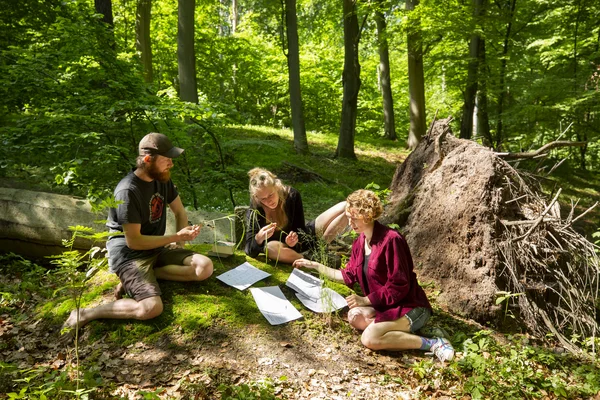
You will be able to use identification literature and possess knowledge of herbaceous plant species. You will also have a basic understanding of plant systematics and applied vegetation science. You will acquire knowledge of woody plant ecology and the systematics of selected woody taxa, and will be able to identify selected native and non-native tree and shrub species.
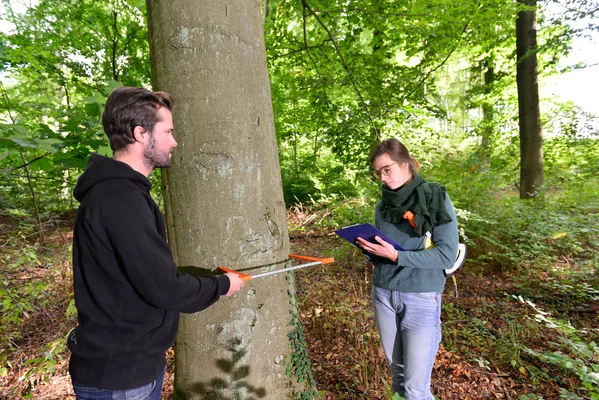
The module comprises the sections on dendrometry, biometry and the use of measuring instruments.
You will be able to independently and efficiently collect, process and analyse simple, predominantly single-tree-oriented, spatially-related forest data. You will have a basic understanding of environmental data analysis and be able to design sampling schemes. You will be familiar with the most important forestry measuring instruments used for forest surveys and know which instruments are used for what purposes and how. You are familiar with the practical use of the various forestry measuring instruments, as well as measurement and instrument errors.
You are able to analyse legal norms and their origins in a nuanced manner; you understand administrative and penalty proceedings and the differences between them, and are able to make legally compliant decisions, particularly in the field of forestry law, and to present these in the appropriate form. You are familiar with the significance of the provisions of the German Civil Code (BGB) that are necessary for the execution of legal transactions such as the sale of timber, the leasing and letting of land, or the purchase of work equipment. You are aware of the importance of general terms and conditions for the practical implementation of contracts and can understand key clauses. You are familiar with the main legal forms for businesses and their legal implications, as well as the fundamentals of employment law.
The module consists of the sections ‘Academic Writing and Presentation’ and ‘Communication’.
You will learn about the basic structure of an academic paper and how to conduct academic research. You will also be able to apply presentation techniques effectively. You will learn to communicate in a way that is appropriate for the target audience and the situation.
The module comprises a field exercise in site and vegetation science (2nd semester) and a field and laboratory practical in soil science (3rd semester).
You will be able to identify soils in the field and determine their site-ecological properties using field methods. Furthermore, you will be able to draw conclusions about the key site conditions based on vegetation surveys. The results can be used to make recommendations for tree species selection based on site conditions.
Building on 'Hunting Management I': the theoretical component of the hunting licence.
In the third semester, we focus on practical applications, with an emphasis on silviculture, forest growth, forest health, forestry technology and processes, timber utilisation and business management.
They are able to select and supervise appropriate forestry working methods within the context of sustainable forest management. They can apply the basic knowledge of workforce management required for the planning and execution of practical forestry work.
You are familiar with the relevant properties and characteristics of wood and are able to supply wood in accordance with customers’ requirements.
The module comprises the following sections: Data Management, GIS Exercises and Tutorials, and Geodata and Geoinformatics.
Through practical application, you will be able to create data tables with their fields and corresponding field data types, and recognise structures and dependencies between the data. You will be able to construct functions and expressions for data analysis, interpret results, and address various scientific questions. You will be familiar with the methods and tools of data visualisation and will be able to produce structured output. You will have a basic knowledge of applied geoinformatics, enabling you to acquire practical skills in handling spatial data and using relevant GIS software for application in modern (digital) forestry. You have a basic theoretical understanding of applied geoinformatics and are able to understand the practical forestry applications of digital spatial data and automated sensor data in forestry.
The module comprises the components of forest measurement, forest growth science and an introduction to applied silviculture.
You will be able to methodically prepare and carry out simple forest assessments, as well as analyse and interpret the collected stand data. You will understand the influence of natural and human factors on the growth, yield, stability and structure of forest stands, and analyse in detail the growth dynamics of different tree species in pure and mixed stands. On this basis, you will develop and evaluate management and utilisation strategies using planning tools such as yield tables and simulation models. You will be able to assess the silvicultural potential of native and non-native tree species, taking into account site-specific and ecological conditions. Through targeted tree species selection and knowledge of fundamental management systems, you can design and manage stable, productive forests that provide a wide range of ecosystem services.
The module comprises a field exercise in site and vegetation science (2nd semester) and a field and laboratory practical in soil science (3rd semester).
You will be able to identify soils in the field and determine their site-ecological properties using field methods. Furthermore, you will be able to draw conclusions about the key site conditions based on vegetation surveys. The results can be used to make recommendations for tree species selection based on site conditions.
You will be able to understand the fundamentals of wildlife biology and hunting within an ecosystemal context and, where appropriate, apply them in practice.
The module comprises the components Public Relations (3rd semester) and Forest Education/Education for Sustainable Development (4th semester).
You will be equipped to become advocates for nature- and environment-friendly practices and acquire the tools to engage with the media and the general public. You will be able to identify and engage various forest-related stakeholders and their interests, as well as apply appropriate conflict resolution strategies.
In this compulsory elective module in the 3rd and 4th semesters, the fundamental methodological GIS procedures covered in the compulsory modules are expanded upon, explored in greater depth and applied to specific forestry tasks that were introduced in previous modules. You will tackle a complex forestry-related problem in the form of a project, using modern geodata infrastructures and applying methods and tools from applied geoinformatics.
The module comprises the components ‘Fundamentals of Plant Pathology and Environmental Monitoring’ (3rd semester) and ‘Applied Tree Pathology’ (4th semester).
You will be able to identify biotic and abiotic plant diseases in woody plants and apply environmental monitoring methods in the forest.
Students are able to communicate in English on topics relevant to forestry.
You have practical knowledge of the main methods used to monitor wildlife. You can use these methods as tools for the long-term, targeted monitoring and assessment of the status of wildlife populations.
The module comprises the sections on tree care and assessment, and damage diagnosis in woody plants.
You will learn to identify damage to trees and shrubs, distinguish between the underlying causes and make a basic assessment of the damage. You will acquire the scientific and legal principles underlying the care and restoration of trees and their sites.
You will be able to understand agroecological interactions, policy frameworks and the potential of various agroforestry systems, and, above all, to assess and evaluate them in terms of their practical feasibility. You will understand the relevance of the parameters measured on the agroforestry trial plot and will be able to plan, carry out and evaluate a suitable experimental design.
They are able to think and work in a scientific manner by recognising the diverse properties of wood in their entirety. They are proficient in using identification keys and can identify the main types of wood.
You will be able to understand forest development over the last 5,000 years and the changing demands humans have placed on forests, to evaluate modern forest management against this backdrop, and to discuss it in the context of the history of hunting.
You may also choose elective modules from certain other HNEE degree programmes or from international partner universities that are thematically related to your degree programme.
During the fourth semester, we will expand your practical knowledge, focusing on silviculture, forest growth, forest health, forestry operations and technology, timber utilisation and business management.
The module comprises the sections ‘Wood Utilisation and Marketing’ and ‘Forest Development and Logistics’.
You will be able to market and supply timber as a raw material in accordance with customers’ requirements.
The module comprises the components of forest health, phytomedical expertise, and entomological species and taxonomic knowledge.
You will acquire the knowledge and skills required to assess and respond appropriately to abiotic, biotic and anthropogenic disturbances in forest ecosystems. You will be familiar with the organisms of greatest importance in terms of forest hygiene and forest ecology.
The module consists of the components Forest Economics and Forest Economics Exercises.
You will be able to analyse, evaluate and successfully manage business processes in forestry enterprises under various conditions and with different objectives, particularly in the context of the provision and marketing of all relevant products and services.
The module comprises the following components: Applied Silviculture, Practical Exercises in Silviculture and Forest Inventory, and Forest Inventory and Forest Management Planning.
You will be able to devise silvicultural maintenance and regeneration measures in forests and ensure their implementation in the form of various silvicultural strategies and management concepts, with particular emphasis on near-natural forest management.
You are capable of carrying out the technical, methodological and planning aspects of relevant forestry work
They are able to apply their theoretical knowledge and skills in the management of forest ecosystems in practice, adapting them to the specific circumstances.
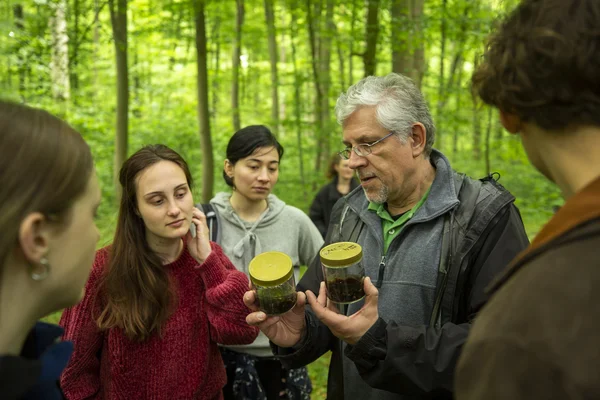
You will be able to survey a forest ecosystem using scientific methods and analyse the results of these surveys. You will acquire practical knowledge of the key methods for surveying vegetation, soil organisms, tree stands and site factors. You will be able to describe the forest ecosystem on the basis of field surveys and derive specific recommendations for forestry management.
You will be able to analyse the state of representative ecosystems and interpret them from a management perspective.
You will gain an overview of the biology and ecology of wildlife, with a focus on mammals and birds. Another key area is the behaviour of native wildlife.
The practical exercises on wildlife management take place during the field trip to Bavaria or Slovakia.
The module consists of two parts: forest access for recreational use and path construction.
You will acquire the basic knowledge required for planning recreational infrastructure and will be able to apply this in the planning of specific measures. You will also gain practical knowledge of appropriate forest path construction and will be able to produce a project report.
By reflecting on the experiences gained through their long-term engagement, combined with an in-depth examination of specialist subject matter, you will develop personal skills such as communication skills, self-efficacy, teamwork and more. You will come to understand the importance of civic engagement and will be able to assess and reflect on the opportunities and limitations within your respective field of study.
You have in-depth knowledge of the principles of sustainable forestry. You are able to apply this knowledge in practical exercises to assess and systematically develop forest stands of varying structures.
You will be able to understand the fundamentals of wildlife biology and hunting within an ecosystemal context and, where appropriate, apply them in practice.
The module comprises the components Public Relations (3rd semester) and Forest Education/Education for Sustainable Development (4th semester).
You will be equipped to become advocates for nature- and environment-friendly practices and acquire the tools to engage with the media and the general public. You will be able to identify and engage various forest-related stakeholders and their interests, as well as apply appropriate conflict resolution strategies.
In this compulsory elective module in the 3rd and 4th semesters, the fundamental methodological GIS procedures covered in the compulsory modules are expanded upon, explored in greater depth and applied to specific forestry tasks that were introduced in previous modules. You will tackle a complex forestry-related problem in the form of a project, using modern geodata infrastructures and applying methods and tools from applied geoinformatics.
The module comprises the components ‘Fundamentals of Plant Pathology and Environmental Monitoring’ (3rd semester) and ‘Applied Tree Pathology’ (4th semester).
You will be able to identify biotic and abiotic plant diseases in woody plants and apply environmental monitoring methods in the forest.
Students are able to communicate in English on topics relevant to forestry.
You have practical knowledge of the main methods used to monitor wildlife. You can use these methods as a tool for the long-term, targeted monitoring and assessment of the status of wildlife populations
You may also choose elective modules from certain other HNEE degree programmes or from international partner universities that are thematically related to your degree programme.
In the fifth semester, you can undertake the practical study semester either in the UK or abroad.
The work placement semester can be undertaken at the following organisations:
- Forestry and timber industry companies
- Environmental and nature conservation authorities
- Development cooperation organisations
- Consultancy and planning firms in the forestry and environmental sectors
- Forest and environmental education institutions
Further placement opportunities outside the aforementioned institutions may be approved upon application by the person responsible for the placement.
The practical semester concludes with a project report and its presentation and currently lasts 20 weeks.
In the sixth semester, you will gain an understanding of business management and management strategies through interdisciplinary project work and write your bachelor’s thesis.
You are able to produce an academic paper on a subject-specific topic of your own choosing. Within the context of your work, you can formulate subject-specific research questions and working hypotheses, and develop and apply established methodological approaches or new methods. You are able to analyse data scientifically and present it appropriately. Conclusions can be evaluated and critically discussed in relation to the results and findings of comparable studies. You are able to write academically and are familiar with the principles of good academic practice.
You are able to survey and plan a self-contained forest unit, taking into account all relevant fundamental and applied disciplines, in accordance with sustainability criteria. You understand the interdisciplinary interrelationships involved in forest management.
The module comprises the sections on environmental law, forestry policy, and governance and certification.
You will be familiar with the nature and components of environmental law and, in particular, the classification and content of the areas of nature conservation law to be covered in depth, especially their relevance to forests. You will be familiar with the environmental assessment procedures of the EIA and the Habitats Directive impact assessment, as well as the specific species protection assessment and its significance for spatially significant projects and plans, along with the corresponding procedural processes, assessment methods and compensation measures. Here too, the forest-related impacts are of particular significance.
You will be able to identify the currently significant alien and invasive harmful organisms, as well as serious, complex disease phenomena. You will be familiar with national and international legal provisions and standards, as well as the specific monitoring, prevention and eradication measures relating to plant quarantine.
You will be able to analyse, evaluate and successfully manage business operations and processes within forestry enterprises, particularly with regard to the marketing of all relevant products and services.
You will be able to assess the potential and current impact of UNESCO biosphere reserves as learning environments and model regions for ecosystem-based sustainable development, and to identify the current management challenges using selected examples.
They are able to identify and analyse relationships between tree physiology, genetics and environmental responses. They are familiar with the methodological principles and measurement techniques involved in conducting tree-ring analyses and can carry out statistical evaluations using the statistical software R. Tree-species-specific dendroecological interactions between site-specific and ecological factors, as well as anthropogenic influences, as these can be identified and demonstrated from tree-ring time series, can be quantified and scientifically assessed.
You may also choose elective modules from certain other HNEE degree programmes or from international partner universities that are thematically related to your degree programme.
The practical training, with its numerous hands-on exercises and field trips to a wide variety of forest areas and forest owners, has prepared me perfectly for my career.
Ulrike Kreplin
Forestry student
Georg Ambrosat and Maria Huisinga
FAQ: Course Content
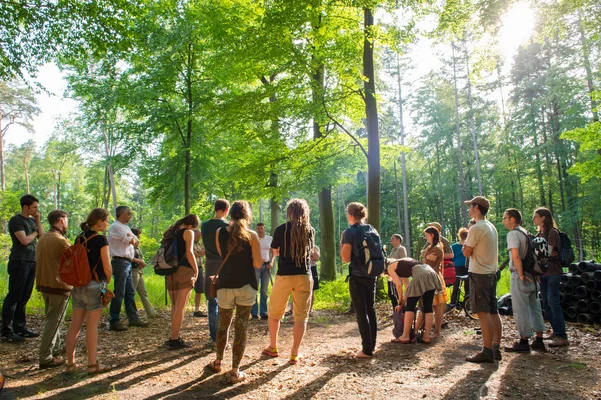
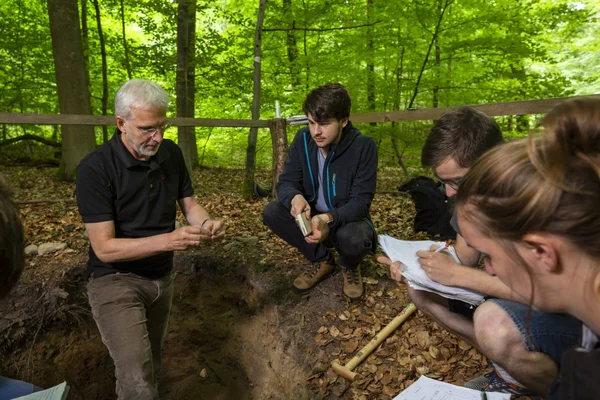
The Bachelor’s degree programme in Forestry is characterised by a high proportion of practical work, which accounts for around 50 per cent of the course.
As a student on the Forestry degree programme, you can obtain the State-Certified Forest Educator certificate whilst studying. You can find more information here.
To a limited extent, yes. Please contact the academic advisory service for further details.
The wide range of career options is presented by graduates of the programme at an annual careers fair, offering students and alumni the opportunity to network at an early stage.
The Working Group on Forestry Careers: AKFB e. V. stands for "Arbeitskreis forstliches Berufsbild". The main aim of AKFB e. V. is to raise awareness of careers in forestry (focusing on: career guidance and information on scholarships and work placements). Once students have graduated, the “Job Information” section is key to providing job seekers with more effective information.
The alumni network of the Eberswalde University for Sustainable Development has been in existence since 2001. We look forward to hearing from you!
Since 1992, almost 900 graduates have successfully completed the degree programme (see current programme statistics).